
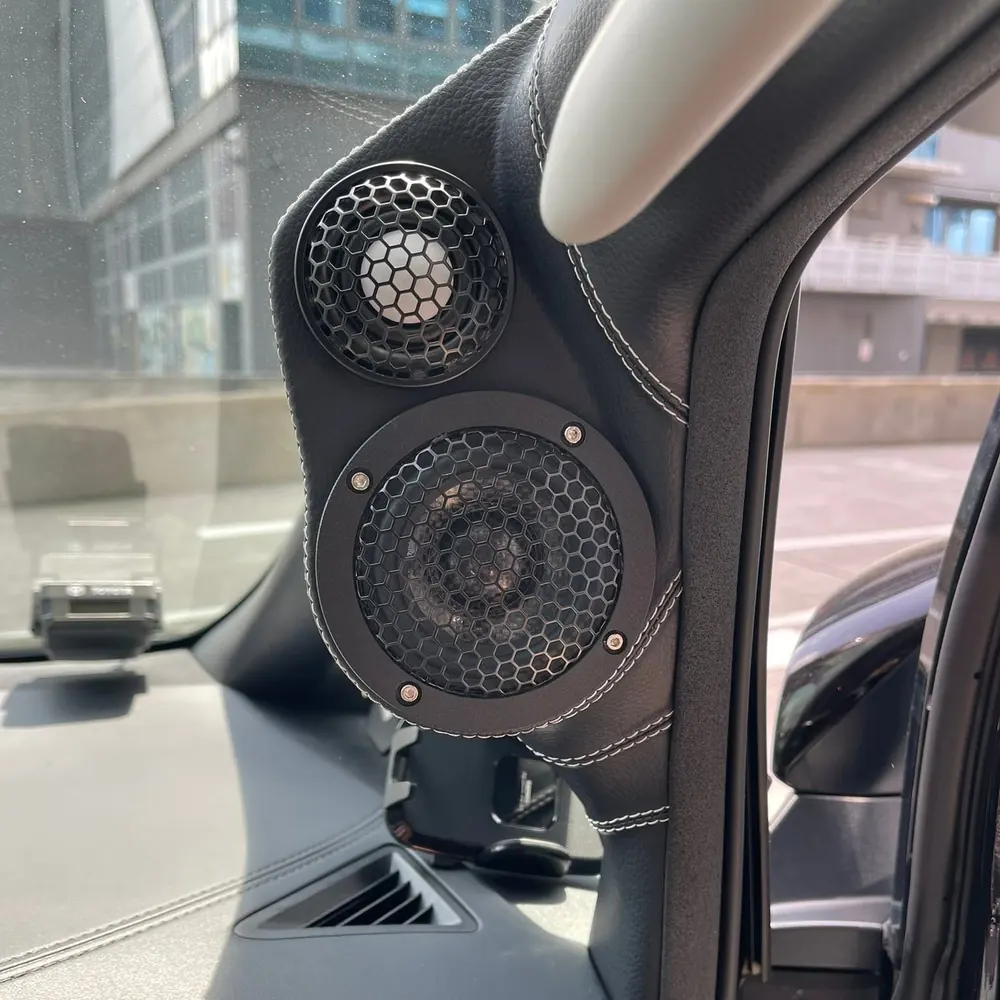
The same equipment can sound sublime or mediocre depending on who installs and tunes it. Choosing the right specialist is the highest-leverage decision in any car audio project — more than any single component. Here is what to look for, from a brand whose products are installed by specialists across Asia.
1. Look at their actual work, up close
Ask to see cars they have built, or at least detailed photos of their own work — not brochure shots. Look for tidy wiring with proper loom and protection, factory-grade panel fitment, and custom fabrication (like A-pillar pods) that looks like it left the factory that way. Sloppy visible work reliably predicts sloppy hidden work.
2. Do they design systems, or just sell boxes?
A specialist starts with questions: What do you listen to? How long do you keep the car? What is the budget — and should it go to speakers, amplification, processing or soundproofing first? If the first answer to every question is the most expensive item on the shelf, keep looking. System matching — source, DSP, amplification, speakers — is the actual skill you are paying for.
3. Can they tune, and can they prove it?
Modern systems live or die by DSP calibration: time alignment, crossover selection and equalisation set for your cabin, measured with proper tools and finished by ear. Ask who does the tuning, what their process is, and whether you can sit in a car they have tuned. Competition results are the strongest evidence — EMMA awards are earned in front of trained judges, which is why ETHOS products carry theirs.
4. Warranty, insurance and OEM safety
A professional shop uses model-specific harnesses instead of cutting factory looms, protects your vehicle warranty, and stands behind the work: a clear guarantee on both product and labour, and a place you can come back to when you want changes. Confirm they are an authorised dealer for the brands they sell — grey stock usually means no local warranty.
5. Judge the conversation
You will spend hours with this shop across consultation, installation and tuning. Good specialists explain trade-offs in plain language, tell you when the cheaper option is genuinely enough, and are honest about lead times. Pressure tactics and vague answers are a preview of the after-sales experience.
Questions worth asking any installer
- Who exactly will work on my car, and who tunes the DSP?
- Can I hear a car you have built with a similar budget?
- How do you retain my steering controls, cameras and sensors?
- What is the warranty on parts and on labour?
- What happens if I hear a rattle a week later?
ETHOS tip: the demo car is the interview. Any shop can list brands; only a good one can sit you in a cabin and make you forget you’re listening to a car.
The short version
Choose the specialist on evidence: workmanship you can inspect, systems designed around you, provable tuning ability, authorised-dealer warranty support, and straight answers. To hear what a well-designed ETHOS system sounds like before you choose an installer, visit the Singapore showroom, open daily 11am–9pm.